
Transits and Eclipses
A transit is when one celestial object crosses in front of another. An eclipse is when one celestial body partially or fully covers another. We have been fortunate to host Venus and Mercury transits across the face of the Sun, partial solar eclipses, and a lunar eclipse.
December 25, 2000 partial solar eclipse. Solar eclipses occur when the Moon passes between the Earth and the Sun.

The observatory live-streamed a solar eclipse on Christmas day, 2000.
Shown in the reflection on the TV monitor is observatory volunteer Don Ross, running the telescope.
June 8, 2004 Venus Transit
Venus transits are rare, occurring in pairs eight years apart, separated by more than a century. The next Venus transit will be in 2117.


November 11, 2019 Mercury transit
Mercury transits can occur 13 or 14 times a century. The next one will be in 2032.
Mercury transiting the Solar face
This image was taken at McCarthy Observatory through a telescope with a safe solar filter.

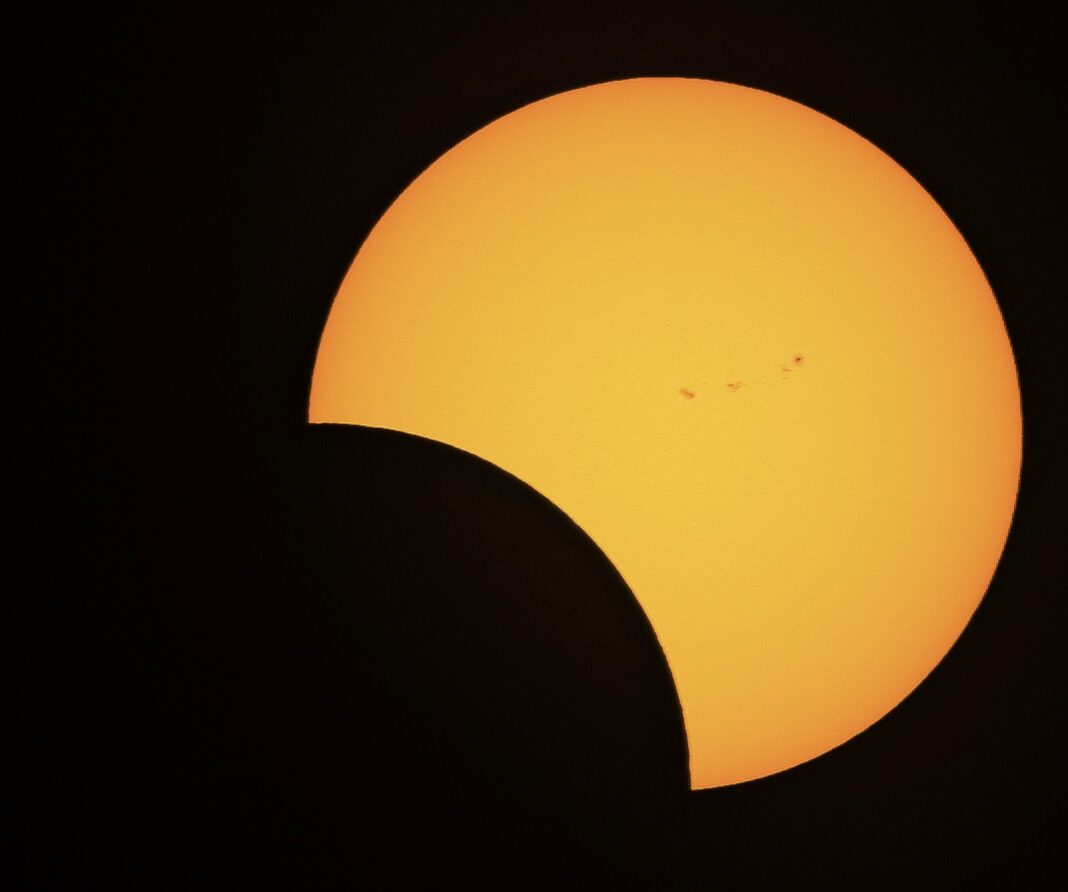
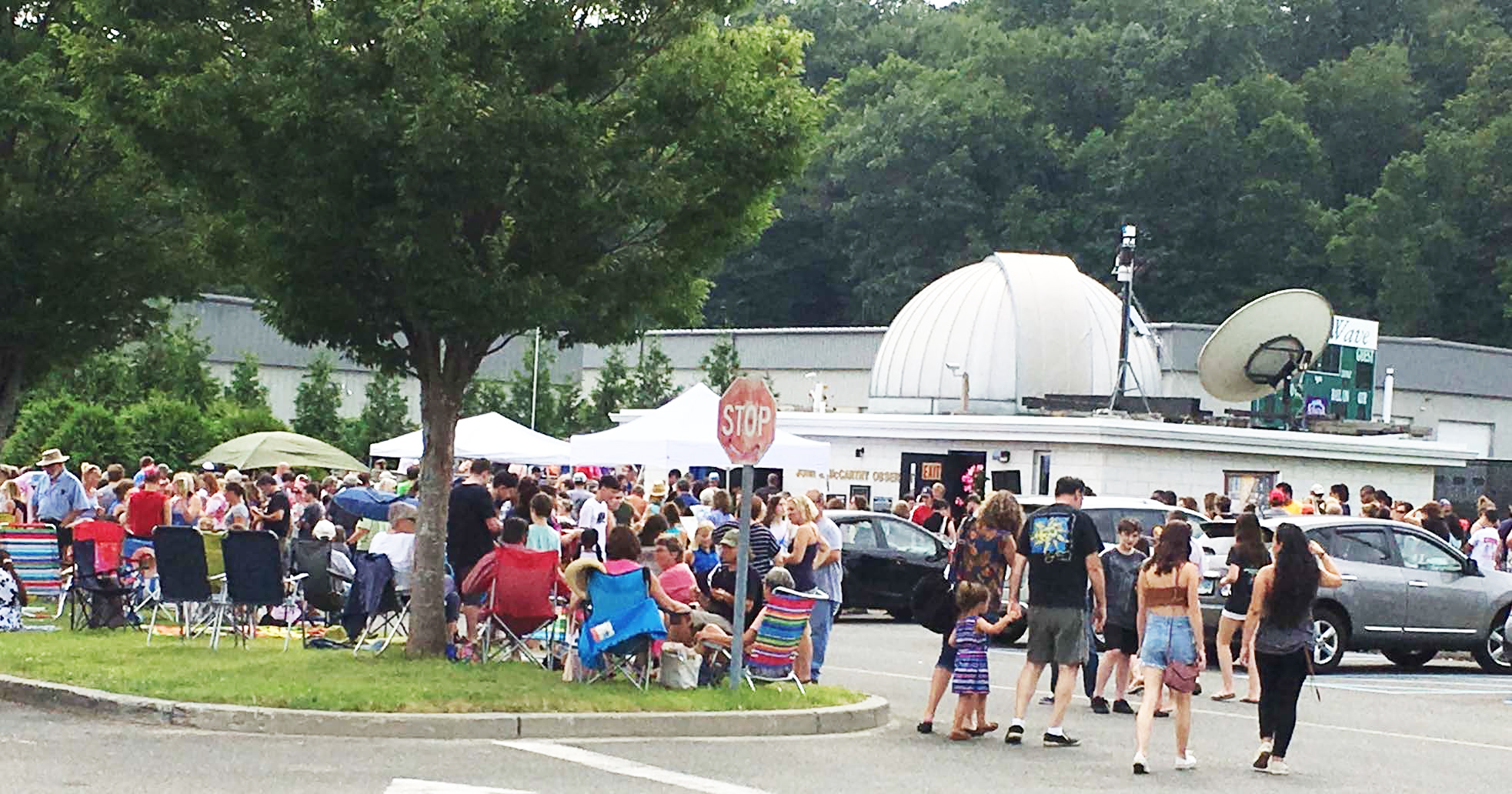
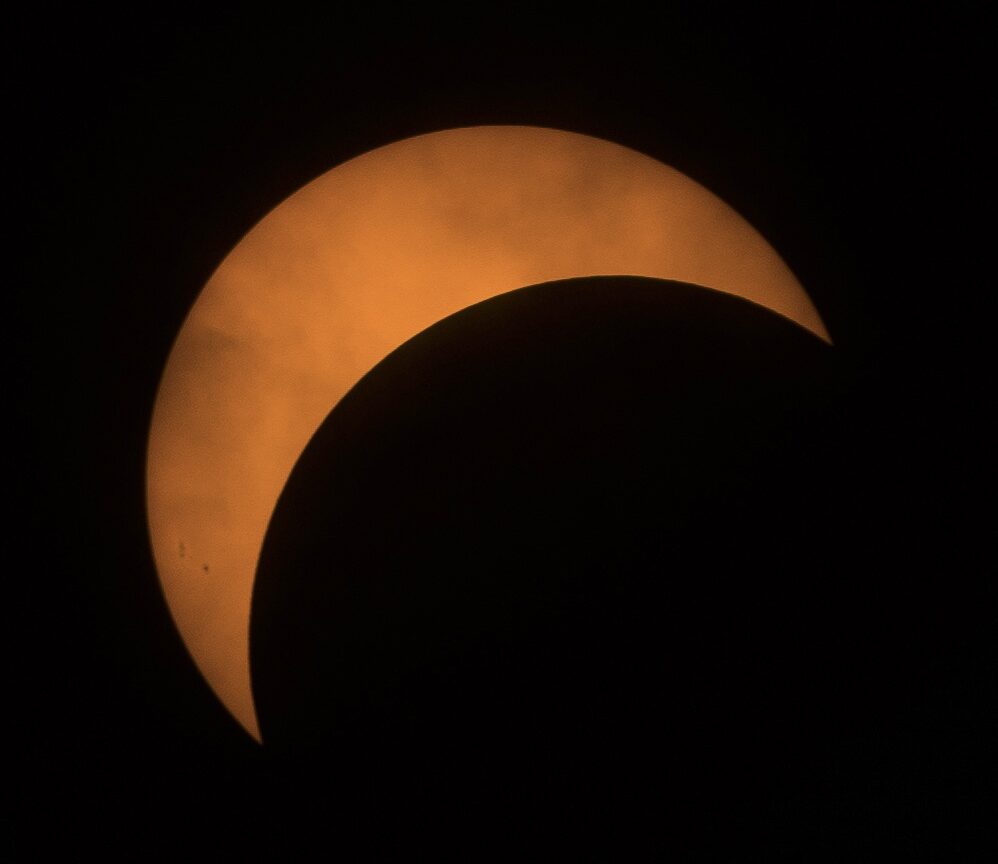
August 21, 2017 partial solar eclipse
August 21, 2017, featured a solar eclipse across the continental United States, from west coast to east coast. At the observatory we saw a partial eclipse with about 70% of the Sun covered by the Moon.

April 8, 2024 partial solar eclipse
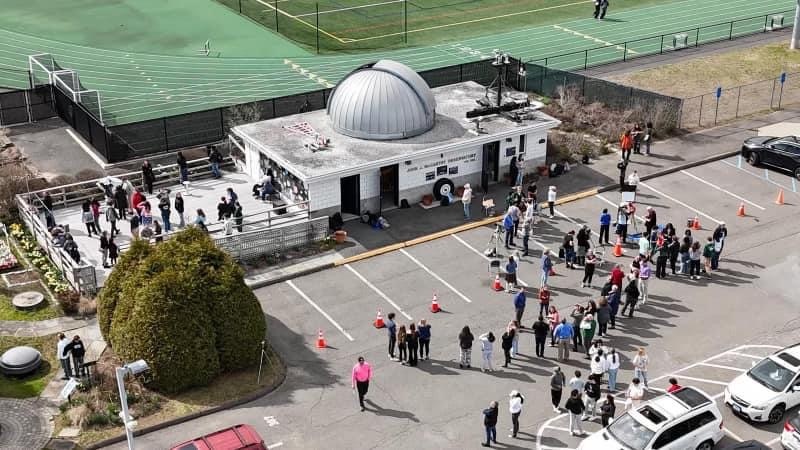
This solar eclipse path moved north from Mexico and extended northeast across the United States and up to Canada. At the observatory we saw a partial eclipse with about 93% of the Sun covered by the Moon.
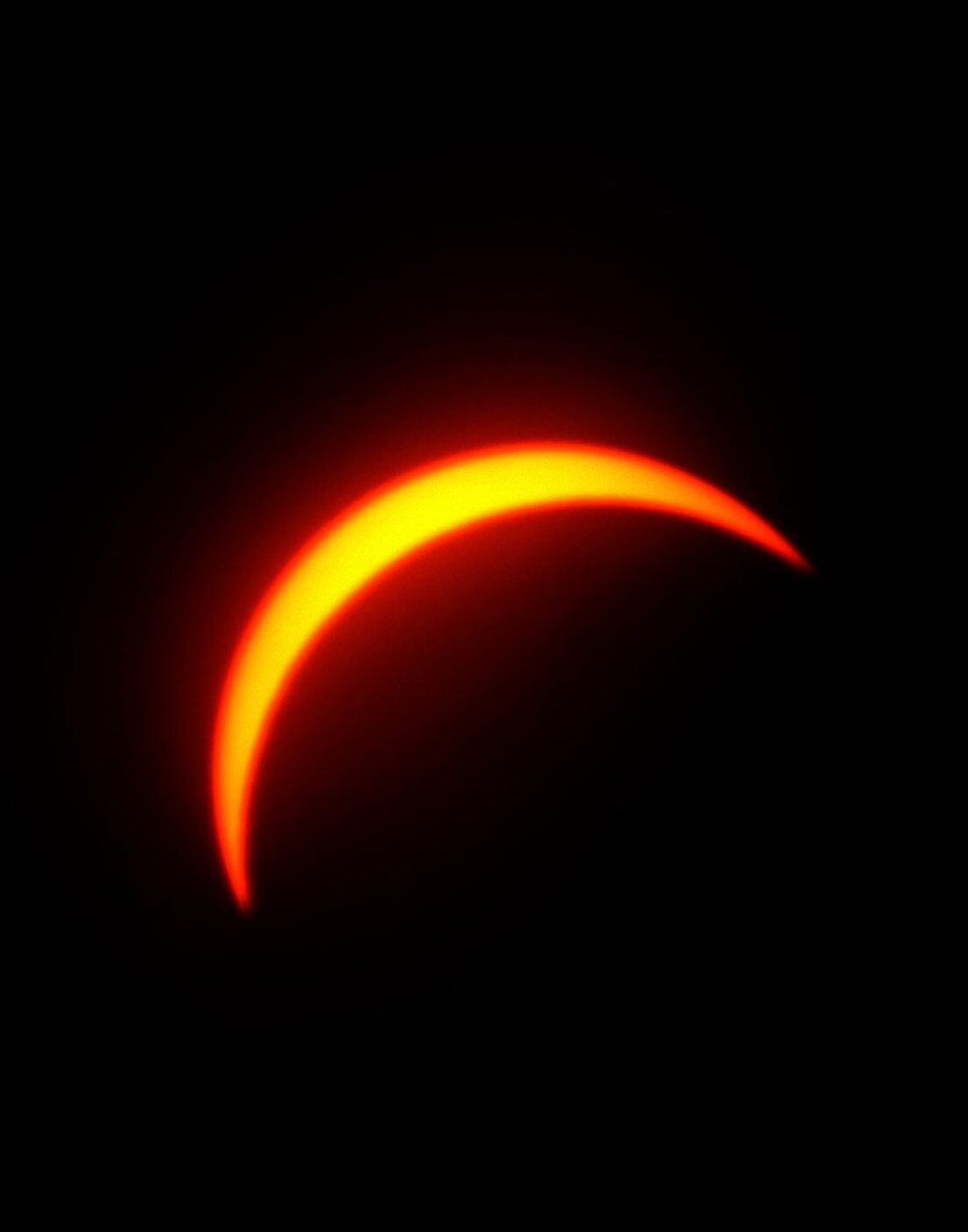
October 26, 2004 Total Lunar Eclipse
Lunar eclipses occur when the Earth lines up perfectly between the Sun and the Moon, and only occur during full Moon. Lunar eclipses can be penumbral, partial, or total. This was a total eclipse on the same night as when the Red Sox won the world series for the first time in 86 years!


Eclipses on other planets
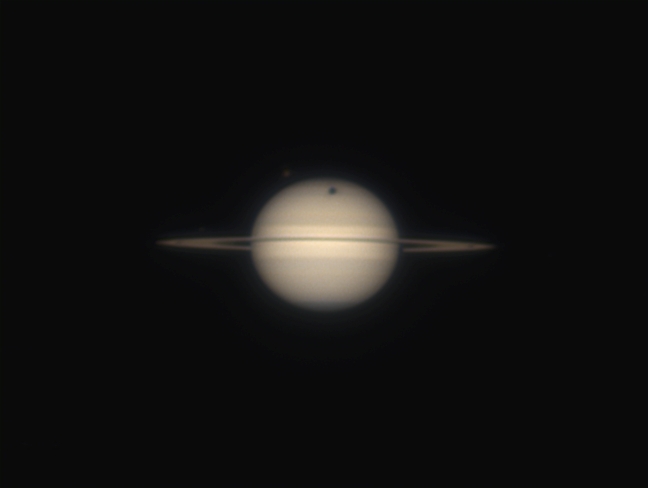
Earth is not the only planet that can experience an eclipse. If you could stand in the small dark area on Saturn shown in the image below, you would see a solar eclipse from Saturn’s largest moon, Titan. The moon is barely visible up and left of the shadow.
Other types of transits
Rarely, a human-made object can be recorded crossing the face of a nearby neighbor, such as the Moon or the Sun.
